

Attachment-Based Therapy for Women in NYC
For women tired of worrying, overthinking, and people-pleasing.
Online therapy across New York & New Jersey
How anxiety & relationship patterns show up in your life
You worry about conversations after they’re over. About whether you said too much, or not enough. About how things might go wrong, even when nothing has yet. Some days you’re short-tempered and don’t fully know why. Other days you’re just exhausted, emotionally tired in a way sleep doesn’t fix. You tell yourself you’ll slow down once this week is over. Once work settles. Once things feel more stable. But even when you stop moving, your body doesn’t really rest.
In relationships, it shows up too.
You try to be easy to be with. Understanding. Low-maintenance. Then later, you feel irritated or distant, and wonder why this keeps happening. You don’t say anything right away. You push it down. You handle it yourself. Until it spills out sideways. Or the connection starts to feel heavy. Or you pull back altogether.

This kind of worry isn’t random. It comes from learning to stay alert to read the room, anticipate reactions, and manage yourself so things don’t fall apart. That worked once. It helped you stay connected. But now, it keeps you tense (even when you’re safe).
Therapy here isn’t about fixing your personality or telling you to “communicate better.”
It’s about learning how to notice what you’re feeling before it turns into irritation or shutdown. How to name your needs without apologizing for having them. How to stay present when a relationship feels good, without bracing for the other shoe to drop.
We slow things down enough that your body can catch up to what you already understand. Not all at once. Just one moment earlier at a time.
What therapy with Malika actually looks like
This isn’t therapy where you perform insight.
You don’t have to explain everything perfectly here. You don’t have to already know what you feel. And you don’t have to be “good at therapy” to make progress.
This work is relational and steady. We pay attention to what’s happening as it’s happening: the pauses, the irritation, the urge to minimize, the moments you want to pull back or take care of someone else instead. Those moments matter more than the story you bring in.
Working together looks like:
Slowing things down enough to notice what your body is doing
Practicing how to name a need before it turns into resentment
Learning how to ask for support without feeling weak or guilty
Staying present when connection feels good, instead of waiting for it to fall apart
You’ll still gain insight, but it won’t stop there. You’ll leave sessions with language, tools, and small shifts you can use that same week.

Hi, I’m Malika Latchman, LMHC
I am a licensed therapist providing attachment-based therapy for women in NYC and via telehealth.
I work with women who are thoughtful, capable, and emotionally aware (and tired of carrying everything alone). My style is warm and direct. I’ll meet you with care, and I’ll also be honest when something needs to be looked at more closely.
We move at a pace that’s respectful of your nervous system, not rushed by productivity or pressure.
This work touches the places where things keep getting heavy.
-

In Relationships
You start out hopeful. You tell yourself this time is different. Then you notice yourself pulling back—getting quieter, less available, less sure.
In therapy, we slow down what happens right before you withdraw. You learn how to stay present long enough to notice fear without letting it run the show—and how to choose connection without abandoning yourself.
-
With Boundaries
You say yes when you mean maybe.
You say nothing when something doesn’t sit right. Later, you feel resentful and mad at yourself for not speaking up.This work helps you recognize your limits earlier (before irritation takes over) so boundaries feel clearer, calmer, and less explosive.
-

With Anxiety & Exhaustion
Your mind stays busy even when your life looks “fine.” Rest feels unproductive. Slowing down makes you uneasy.
Therapy helps your body learn that it doesn’t have to stay on alert.
Not by forcing calm—but by practicing safety in real time, one interaction at a time. -

With Family (especially your mom)
You brace before certain conversations.
You leave them feeling misunderstood, guilty, or like a child again.Together, we focus on separating who you are now from the roles you learned to play—so contact doesn’t require shrinking, explaining, or over-functioning.
This isn’t about fixing every relationship or never feeling anxious again. It’s about responding differently so your life stops feeling like something you have to manage alone. This practice has a particular focus on Black and Afro-Caribbean women navigating the specific weight of those experiences.
FREE DOWNLOAD
For when the relationship with your mother is complicated — and you don't have words for it yet.
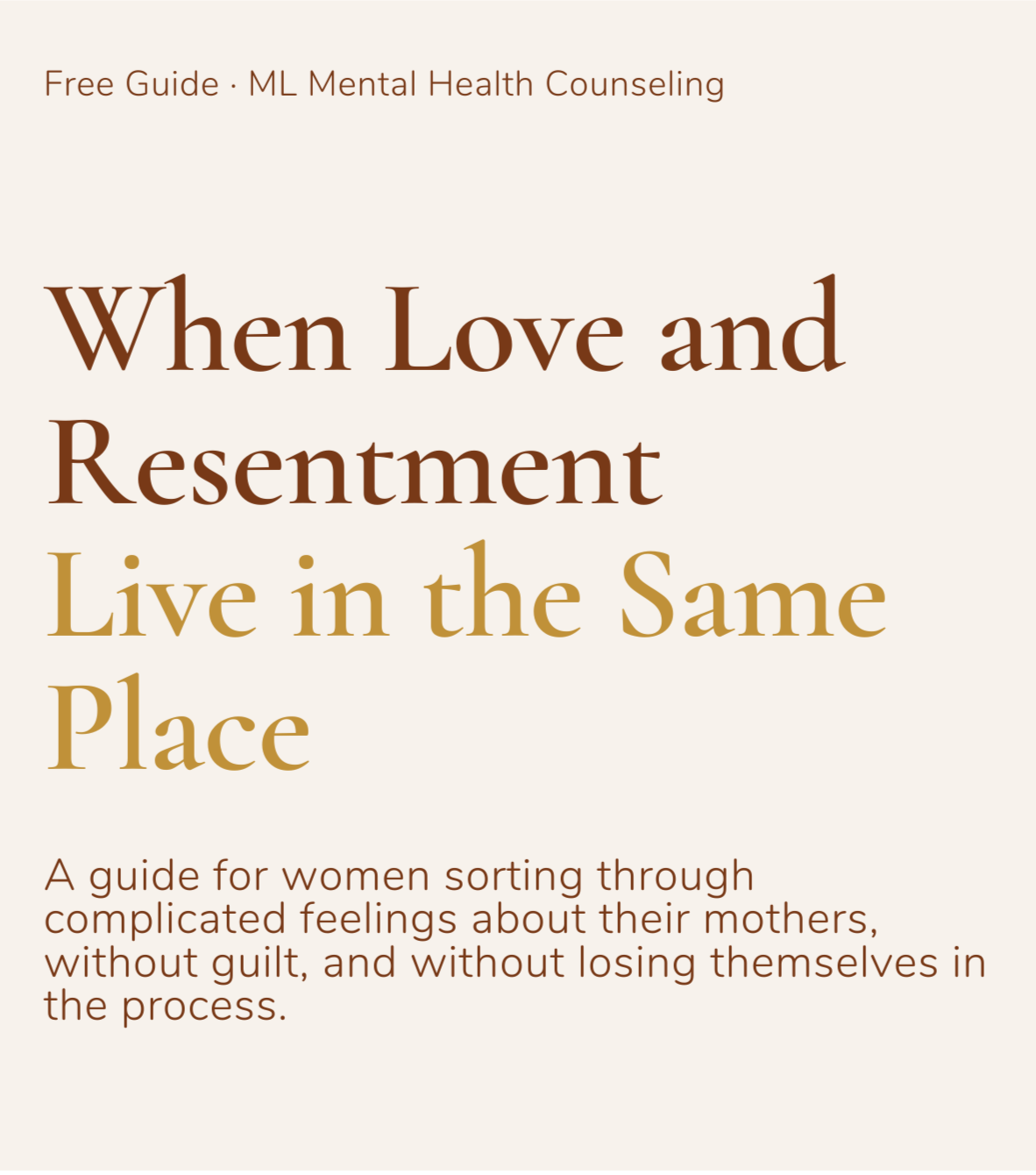
Prompts, scripts, and a framework for navigating the feelings you've been carrying. A guide you can read at your own pace.
You don’t have to have it all figured out to start.
If you’re feeling tired of worrying, tired of repeating the same patterns, and tired of handling everything on your own—this is a place to slow down and take stock.
A consultation isn’t a commitment to therapy.
It’s a conversation.
We’ll talk about what’s been feeling heavy, what you’ve already tried, and what kind of support would actually be helpful right now. You can ask questions. You can take your time. And you can decide what feels right for you.
This work is for women who want real change. Not overnight, not perfectly, but in ways that carry into their relationships, their boundaries, and their daily lives.
When you’re ready, we can take the next step together. Begin Here.
Free Consultation
|
NYC-Based
|
Telehealth Available
|
Free Consultation | NYC-Based | Telehealth Available |
Frequently asked questions about therapy with Malika Latchman, LMHC
-
Yes. And not by telling you to “think positive” or calm down.
The kind of worry I see most often isn’t random—it’s the result of being emotionally alert for a long time. In our work, we focus on helping your body and mind feel safer together, so worry doesn’t have to run the day.
-
A lot of my clients come in saying, “I already understand my patterns—I just can’t stop them.”
This work doesn’t stop at insight. We pay attention to what’s happening in the moment—when you want to pull back, people-please, or shut down—and practice responding differently, with support. That’s where things begin to shift.
-
That makes sense—especially if you’ve been the dependable one for a long time.
You don’t have to come in knowing how to ask for help “the right way.” We go slowly. We notice what comes up. And we work with the part of you that learned independence for a reason—not against it.
-
Yes—because we don’t just talk about the relationship.
We pay attention to what happens inside you when closeness feels good, uncertain, or overwhelming.Over time, you learn how to stay present, recognize your needs sooner, and choose differently—without forcing yourself or ignoring your instincts.
-
Yes. This comes up often.
Many Black women I work with carry complicated feelings around their mothers—love, loyalty, guilt, resentment—all at once. Therapy can be a place to untangle that without judgment and learn how to relate without losing yourself.
-
Yes. I offer telehealth therapy for clients located in New York.
Many of my clients are professionals with full schedules. Virtual sessions make it easier to show up consistently—without therapy becoming another thing you have to manage.
-
You don’t have to perform here.
You’re allowed to pause, to not know, to say “I’m not sure how to explain this.” Part of the work is creating enough safety that words come more easily over time.
-
It’s a conversation—not an intake interrogation.
We’ll talk about what’s been feeling heavy, what you’re hoping for, and whether working together feels like a good fit. You can ask questions. You can take time to decide. There’s no pressure to move forward unless it feels right.